On this page7 sections
Ivermectin and albendazole are two of the most widely used antiparasitic drugs in the world, and they're often mentioned together because public-health programs sometimes give them as a pair. They aren't interchangeable, though. They work in different ways and are chosen for different infections.
The quick comparison
| Ivermectin | Albendazole | |
|---|---|---|
| Drug class | Avermectin | Benzimidazole |
| How it works | Paralyses the parasite's nerves and muscles | Starves the worm by blocking its tubulin (cell structure) |
| FDA-approved oral uses | Strongyloidiasis, onchocerciasis (river blindness) | Neurocysticercosis, hydatid disease |
| Commonly used for | Threadworm (Strongyloides), river blindness; topical forms for lice and rosacea | Tapeworm cysts; often used for roundworm, hookworm and pinworm |
| Taken | On an empty stomach with water | With a fatty meal, which improves absorption |
| US brand | Stromectol | Albenza |
How each drug works
Ivermectin binds to glutamate-gated chloride channels, which invertebrate nerve and muscle cells have and mammals essentially don't. The parasite is paralysed and dies. That's why it works well on threadworms and the microfilariae that cause river blindness.
Albendazole belongs to the same family as mebendazole and fenbendazole. It stops parasites from building microtubules, so they can't absorb glucose and run out of energy. It's broad against intestinal worms and, at longer courses, reaches tissue cysts from tapeworms.
Which infections each is used for
Neither drug covers everything. For Strongyloides (threadworm), ivermectin is generally preferred. For tapeworm cysts in the brain or liver, albendazole is the drug with FDA approval. For common gut worms such as roundworm, hookworm and pinworm, prescribers often reach for albendazole or mebendazole. Our FDA-approved uses guide covers ivermectin's approvals, and fenbendazole vs mebendazole explains the benzimidazole family.
The right drug depends on which parasite you have, which usually means a stool or blood test first. A prescriber makes that call and sets the amount; we don't give dosing instructions.
Can they be taken together?
In some mass treatment programs, yes. The World Health Organization recommends combinations that include both ivermectin and albendazole for lymphatic filariasis in certain regions. Outside those programs, combining them is a decision for a prescriber who knows what infection is being treated.
Safety differences
Both are usually well tolerated in short courses. Ivermectin's common side effects include dizziness, nausea and itching; our side effects and interactions guide lists them, including the warfarin interaction. Albendazole can raise liver enzymes and lower blood counts on longer courses, so prescribers may order blood tests. Albendazole isn't recommended in pregnancy, and ivermectin's safety in pregnancy isn't established either, so tell your prescriber if you're pregnant or might be.
Never substitute animal products for either drug. Veterinary dewormers are made for animals at very different strengths; here's why that's dangerous.
Where we fit in
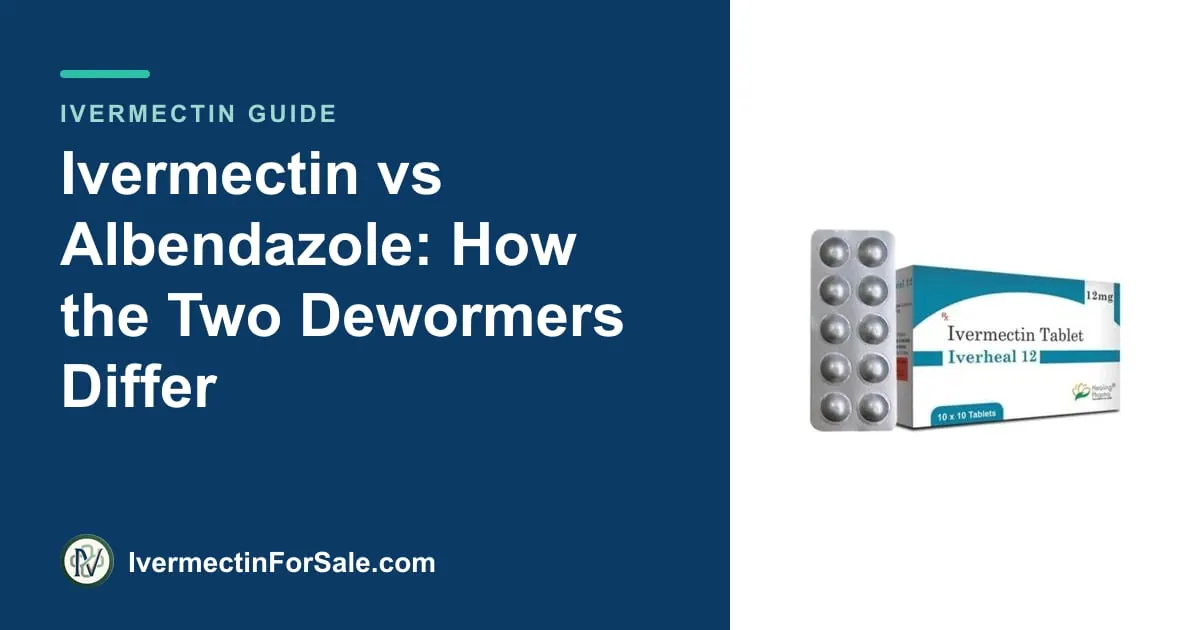
We supply ivermectin as Iverheal tablets in 3mg, 6mg, 12mg and 24mg, made by Healing Pharma. A licensed US doctor reviews every order, and orders ship by tracked USPS to all 50 states.
The short version
Ivermectin paralyses parasites and is preferred for threadworm and river blindness. Albendazole starves worms and is used for tapeworm cysts and many gut worms. They're chosen for different infections, so the first step is finding out which parasite you have.
Frequently asked questions
Is ivermectin or albendazole better?
Neither is better overall. Ivermectin is preferred for threadworm (Strongyloides) and river blindness; albendazole for tapeworm cysts and many common gut worms. The right one depends on the parasite.
What is the difference between ivermectin and albendazole?
They belong to different drug classes and work differently: ivermectin paralyses the parasite's nerves and muscles, while albendazole blocks its tubulin so it can't absorb nutrients.
Can ivermectin and albendazole be taken together?
The WHO uses combinations including both in some lymphatic filariasis programs. Otherwise, combining them is a prescriber's decision.
Do I take them with food?
Ivermectin is taken on an empty stomach with water. Albendazole is taken with a fatty meal, which helps absorption.
This article is general information, not medical advice. Oral ivermectin is a prescription medicine under US federal law, and only some states let pharmacists dispense it without an individual prescription. Talk to your doctor or pharmacist before using it.
Ready to order?
Choose your strength and number of tablets. A licensed US doctor reviews every order, and we ship to all 50 states.